Gossip Protocols & Block Propagation: How Nodes Synchronize in Milliseconds
An architectural analysis of peer-to-peer gossip topologies, Turbine broadcast trees, and Reed-Solomon erasure coding in high-bandwidth networks.
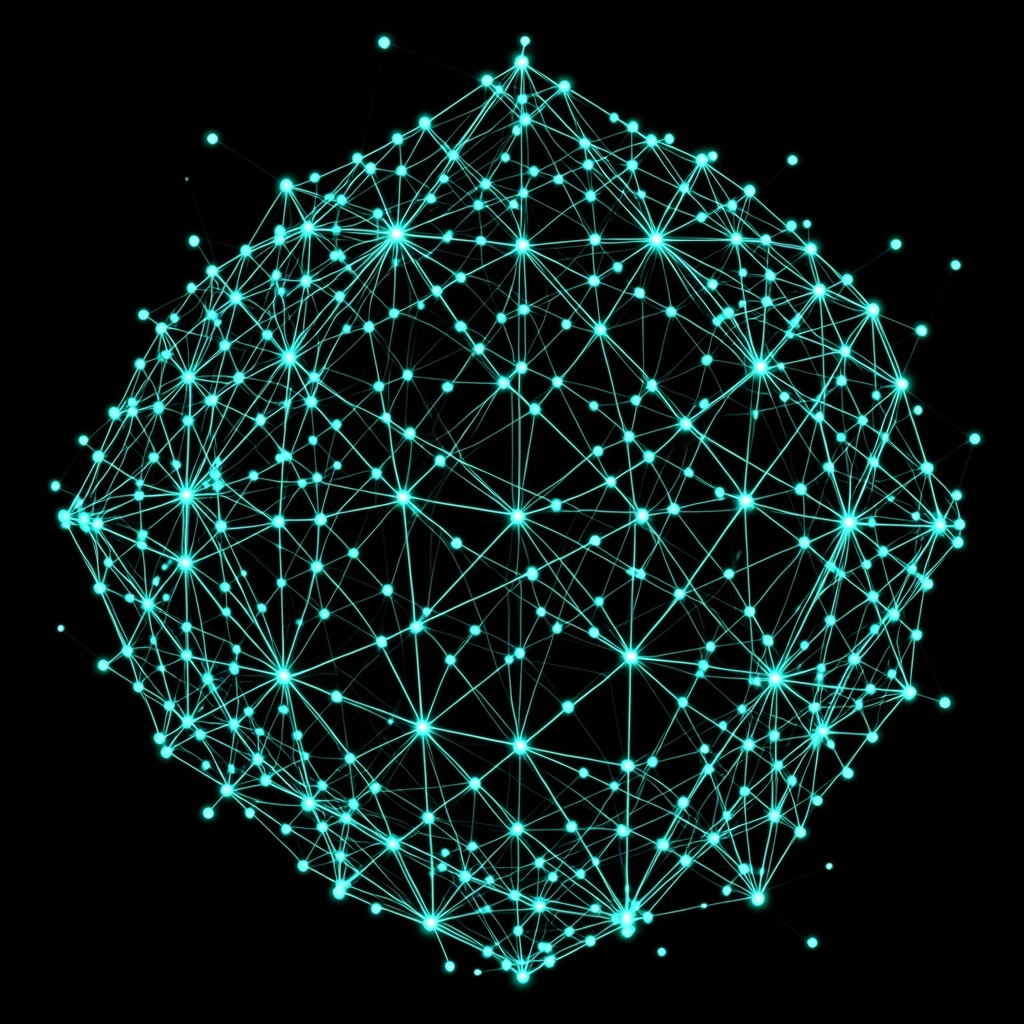
The Distributed Broadcasting Challenge
In traditional blockchain networks, block propagation relies on simple peer-to-peer gossip: Node A sends a full block to Node B and Node C, which in turn send the full block to their peers. While resilient, this flood-based mechanism scales poorly ($O(N^2)$ bandwidth overhead), causing severe network congestion and latency spikes as block sizes exceed a few hundred kilobytes.
High-throughput distributed systems solve this bandwidth barrier by separating Control Plane Communications (Gossip) from Data Plane Broadcasting (Turbine).
1. The Control Plane: P2P Gossip Mesh
The gossip network operates as a decentralized discovery mechanism over UDP sockets. It handles lightweight metadata rather than full transaction blocks:
- Contact Info & Node Liveness: IP addresses, QUIC ports, and software versions.
- Vote Records: Periodic Tower BFT consensus votes cast by validators.
- Epoch Stake Weights: Cluster membership synchronization.
Every node periodically selects a small random subset of peers (e.g., 6–10 nodes) and exchanges gossip packets. Within a few round trips, changes in cluster topology propagate to every active node across the globe.
2. The Data Plane: Turbine Tree-Based Shredding
When a leader validator produces a block containing thousands of transactions, it does not send the block to all validators individually. Instead, it utilizes the Turbine Protocol:
                  [Leader Validator]
                    │ (Data Shreds)
         ┌──────────┴──────────┐
         ▼                     ▼
    [Root Node 1]         [Root Node 2]      (Layer 0: Fanout = 200)
    ┌────┴────┐           ┌────┴────┐
    ▼         ▼           ▼         ▼
[Child 1]  [Child 2]  [Child 3]  [Child 4]  (Layer 1: Leaf Nodes)
The Three-Step Turbine Pipeline:
- Shredding: The leader divides the block payload into discrete 1KB packets called Data Shreds.
- Erasure Coding (Reed-Solomon): For every $N$ data shreds, the leader generates $M$ parity recovery shreds (typically at a 1:1 or 2:1 ratio).
- Tree Fanout: The leader sends shreds to a small first-layer subset of validators weighted by stake. Each recipient node re-transmits its assigned shreds to the next layer down the tree.
3. Resilience Against Packet Loss & Malicious Drop
Because public internet backbones occasionally drop UDP packets or suffer route flap latency, Reed-Solomon Erasure Coding provides critical fault tolerance:
- If a block is divided into 64 Data Shreds + 64 Recovery Shreds (128 total shreds), any validator that receives any 64 unique shreds can mathematically reconstruct the entire block immediately.
- A malicious or offline node in the middle layer of the Turbine tree cannot halt cluster propagation, because neighboring branch paths provide enough redundant parity shreds to reconstruct missing slices.
4. Bandwidth Comparison: Flood Gossip vs. Turbine
| Parameter | Flood-Fill P2P (Legacy) | Turbine Tree Broadcast |
|---|---|---|
| Leader Bandwidth Required | $O(N) \times \text{Block Size}$ | $O(\sqrt{N}) \times \text{Block Size}$ |
| Propagation Latency | $O(D)$ hop delays (High variance) | Sub-second deterministic tree depth |
| Packet Loss Recovery | Costly TCP re-requests | Instant local erasure reconstruction |
| Throughput Scaling | Degrades exponentially | Scales smoothly to tens of thousands of nodes |
Conclusion
By splitting network signaling into an asynchronous gossip control plane and a multi-tiered Turbine data pipeline, modern high-throughput architectures achieve global millisecond synchronization without overloading individual validator internet uplinks.